Mint2015 – 2017
Making credit score the front door to Mint
I led the design of a credit-score-first Mint experience that delivered value before asking customers to connect their financial accounts. Launched in two months, the product created a new acquisition channel, generated new revenue, and established the foundation for a more personalized Mint.
Role
Design Strategist
Timeline
2 months to initial launch
Scope
Responsive web and mobile
Target
Reduce acquisition drop-off by delivering value before account connection
The Challenge
Mint lost approximately 60% of prospective customers at the point in the acquisition funnel where they were asked to connect a financial institution.
Intuit’s Voice of the Customer feedback revealed why: Mint was requesting access to sensitive financial information before customers had received meaningful value or developed sufficient trust in the product. The experience was asking customers to make a significant commitment before giving them a compelling reason to continue.
Hypothesis
Offering customers a credit score would deliver immediate value while giving Mint a foundation for more relevant guidance and continued engagement.
OUTCOME
20% increase in email open rates
- More than 1,500 new users an hour at launch
- 16–19% increase in click-through rates
- 59% engagement with the Mint promotion after customers filed through TurboTax
- Up to $100K in weekly revenue
Phase 1: Proving Credit Score as an Acquisition Product
The Approach
With only two months from kickoff to launch, we focused the first release on adapting Mint’s existing desktop credit-score experience for responsive mobile use. Reusing proven functionality allowed us to move quickly while establishing a foundation for continued testing and iteration.
We also redesigned notifications as conversational guidance and introduced a TurboTax refund-tracker module to test cross-product engagement and strengthen the relationship between Mint and other Intuit services.
Building a Continuous Learning Plan
After launch, I established a regular working cadence with the Analytics team to understand how customers engaged with the product, responded to email campaigns, and progressed through the acquisition funnel. These insights allowed us to continuously refine both the experience and our growth strategy.
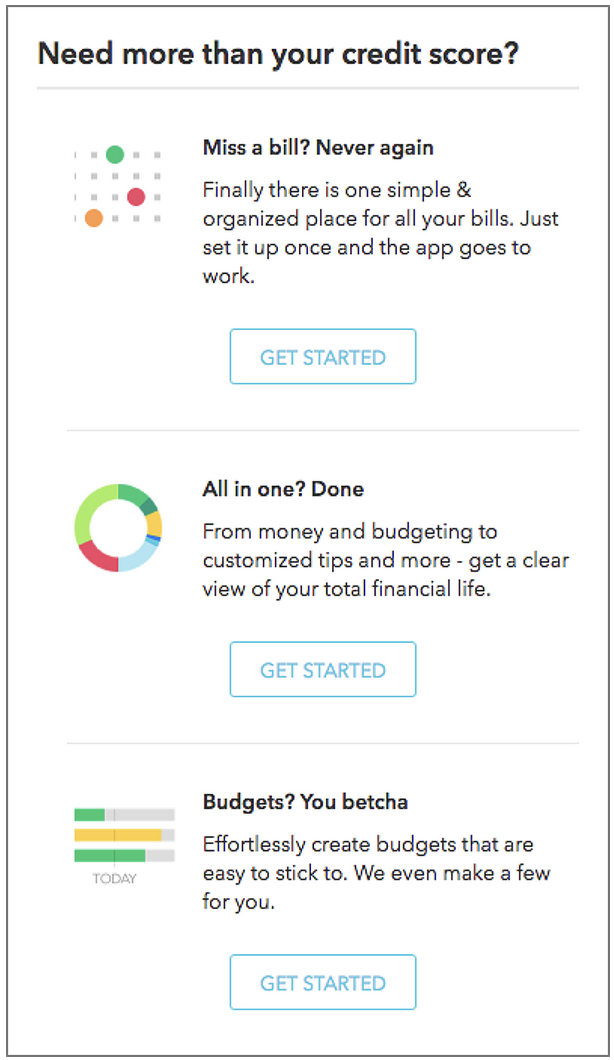
The “Need more than your credit score?” module served as both an acquisition point and a learning mechanism. It presented three of Mint’s core value propositions and tracked which calls to action customers selected. This helped convert Credit Score users into full Mint customers while revealing which additional financial tools they valued most.
Testing Personalized Offers
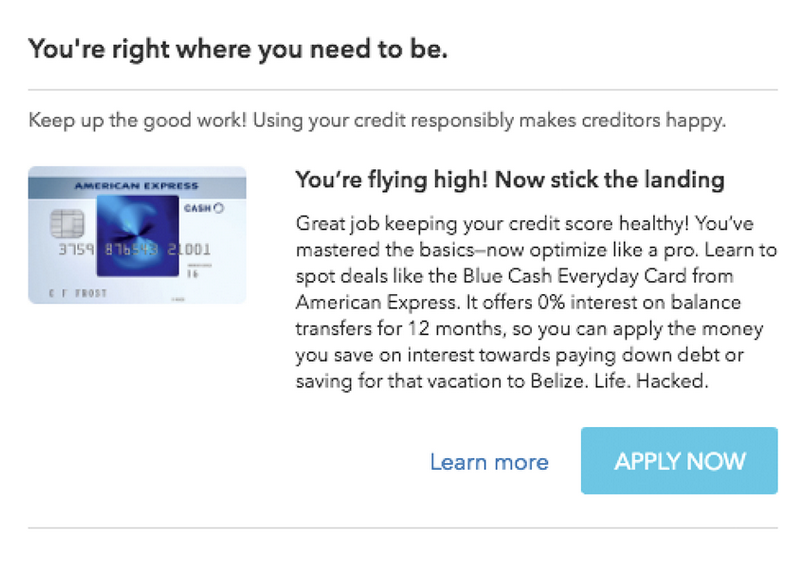
Working with American Express, we introduced credit-card offers tailored to a customer’s credit-score range within the Credit Card Usage module. This was one of Mint’s earliest experiments with personalized product offers.
At its peak, the placement generated approximately $100,000 in weekly revenue.
Understanding Customer Goals
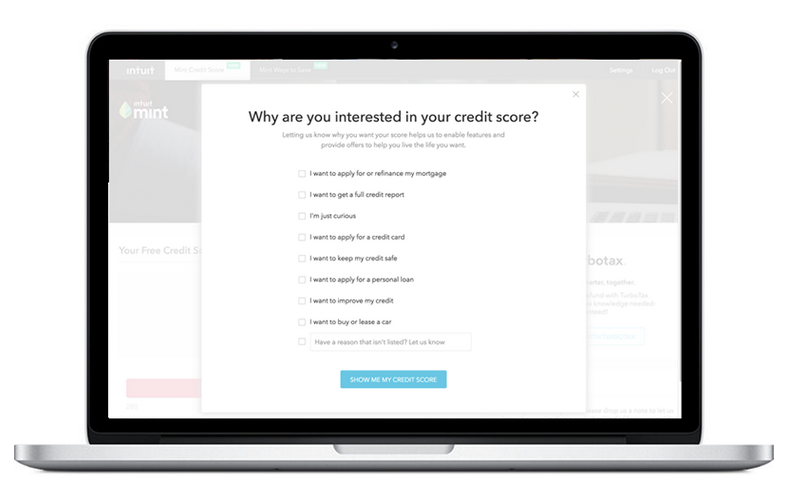
To understand why customers wanted their credit score, I designed a short survey at the end of the application. Customers could select multiple goals or provide their own response, and the answer order was randomized to reduce bias.
Results were delivered to a shared spreadsheet and Slack channel, allowing the project team to monitor customer goals in real time. These insights informed future offers and established a foundation for tailoring the experience around each customer’s financial objectives.
Testing Future Features
I used RITE-based paper prototyping to rapidly evaluate concepts intended to help customers improve their credit scores. This allowed us to learn from customers and refine potential features before investing in full design and development.

Phase 2: Turning the Feature Into a Product Strategy
The Product Vision
MintZero helps people understand, improve, and maintain their credit health by turning a credit score into clear, personalized actions.
Turning Credit Data Into Action
To shape the product strategy, I researched credit-scoring models and analyzed aggregated Mint customer data. The goal was to distinguish between the factors customers could influence and those largely outside their control.
The research also highlighted how little financial margin many customers had. A $400 emergency could force someone to rely on credit, increasing utilization even when they were otherwise managing their finances responsibly. Improving a credit score was not simply a matter of correcting “bad behavior.”
This insight shaped the product strategy. Rather than judging customers for factors they could not control, Mint needed to help them understand their score, identify realistic actions within their circumstances, and make progress where change was possible, particularly around credit utilization and payment timeliness.
Federal Reserve research found that more than one-third of American adults could not cover an unexpected $400 expense using cash, savings, or a credit card paid off immediately.
For many customers, increased credit utilization could reflect a lack of financial margin rather than irresponsible behavior.
The Federal Reserve. “Report on the Economic Well-Being of U.S. Households in 2024 - May 2025.”
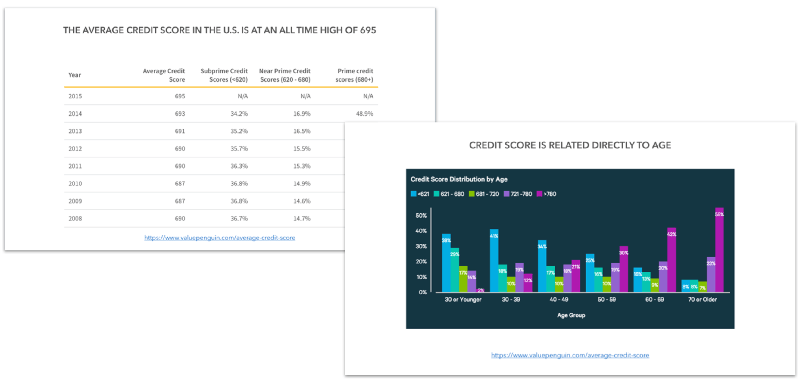
Income also plays a factor. Aggregated customer income data reinforced that folks with high incomes all seemed to fall in the higher credit score brackets (640+). As we were unable to help customers increase their incomes, we needed to focus on improving bad behaviors (use of credit and payment timeliness) in order to help them increase their scores.

Opportunities, Risks, and Reasons to Believe
We focused on customers whose credit utilization or payment patterns presented a realistic opportunity for improvement.
Opportunities

- Low scores offer the greatest opportunity for improvement.
- Higher incomes provide the ability to pay responsibly.
Risks

- Bad financial behavior patterns are hard to break
- Good is the enemy of great
Reasons to Believe
Mint (and Intuit) are in a unique position to provide these customers with tools, guidance, and most importantly – hope.
Mint (and Intuit) are in a unique position to provide these customers with tools, guidance, and most importantly – hope.
Complications Give Rise to Opportunities
Just as the v1 of Mint Credit Score was launched, Credit Karma announced that they would be offering free tax prep beginning that tax year. This positioned Credit Karma as a threat to both Mint and TurboTax and forced us to pivot and focus quickly.
The Approach
Compete directly with Credit Karma’s credit score and tax offering by strengthening Mint’s connection to TurboTax and improving our credit score product while leveraging our unique Intuit customer financial profile to win.
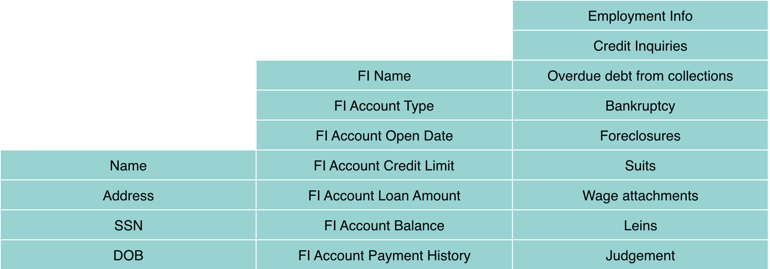
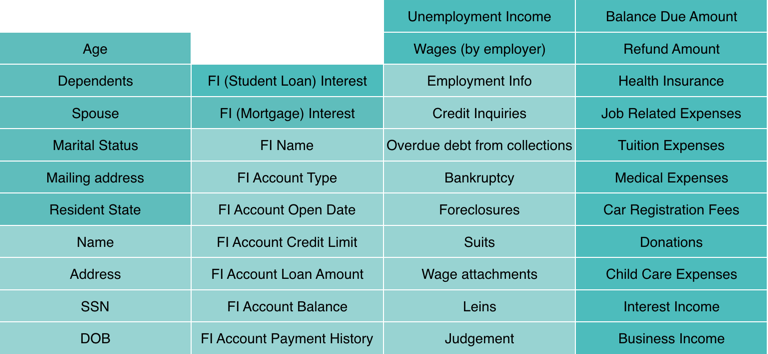
Email is a key customer engagement tool for Mint. The majority of site visits and app opens are driven directly from emails.
We thought about the power of showing a customer their credit score in an email – all the while acknowledging that PII needed to remain protected by a login. Showing a customer’s credit score in an email would also likely reduce logins to mint.com or the app.
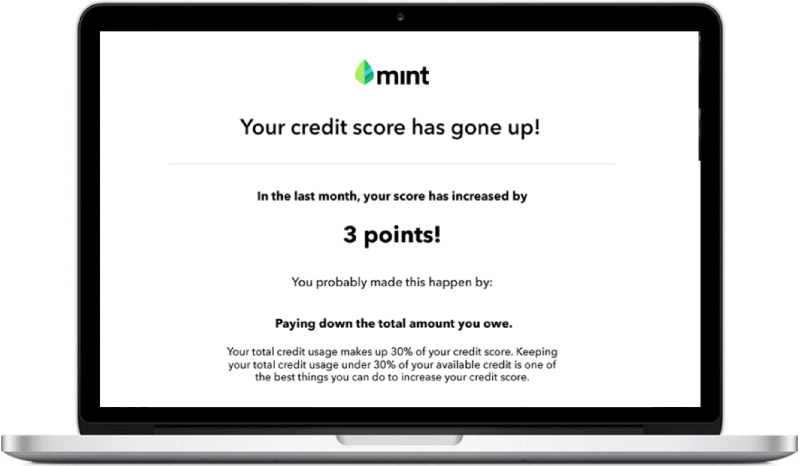
So, we wondered how a credit score email could provide both useful information and engage the customer to the extent that they log into their account to check their score.
We hypothesized that showing the amount of change to their score would pique the interest of our customers – thus satisfying both useful info and customer engagement.
After consulting with Intuit legal counsel and gaining their approval, we released the design as a test to a subset of customers.
Testing of this email resulted in a 20% increase in open rates over our regular CS update email and 16-19% increase in click-through rates.
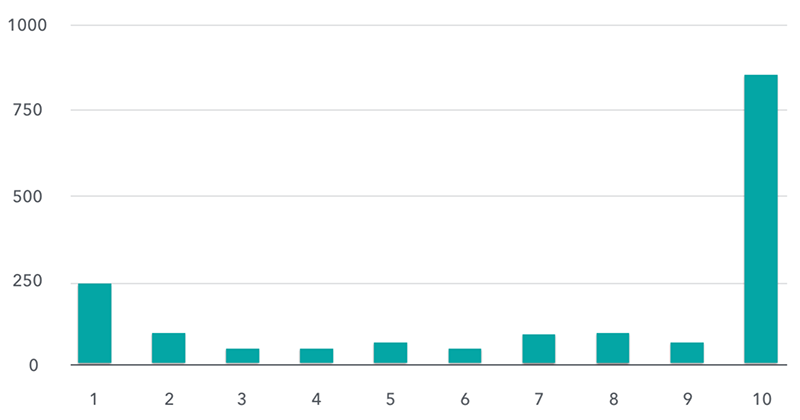
Better still, Voice of the Customer feedback on the email was overwhelmingly positive with the majority of responders rating the new email experience as a 10 out of 10.
Engaging With TurboTax Customers
We connected the Mint and TurboTax experiences to test whether tax customers would engage with additional financial guidance after filing.
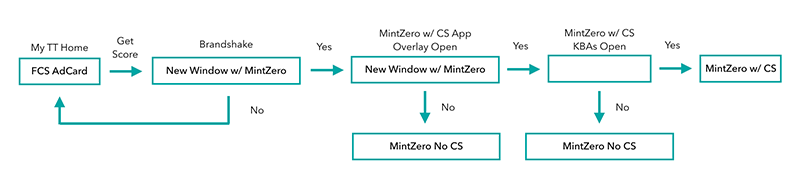
Once a customer completed their tax return in TurboTax, they were given a promo to direct them to Mint, where they would receive information about their Federal and State return status.
59% of customers engaged with the Mint promo after filing their taxes – this was a massive influx of new users for the Mint platform.
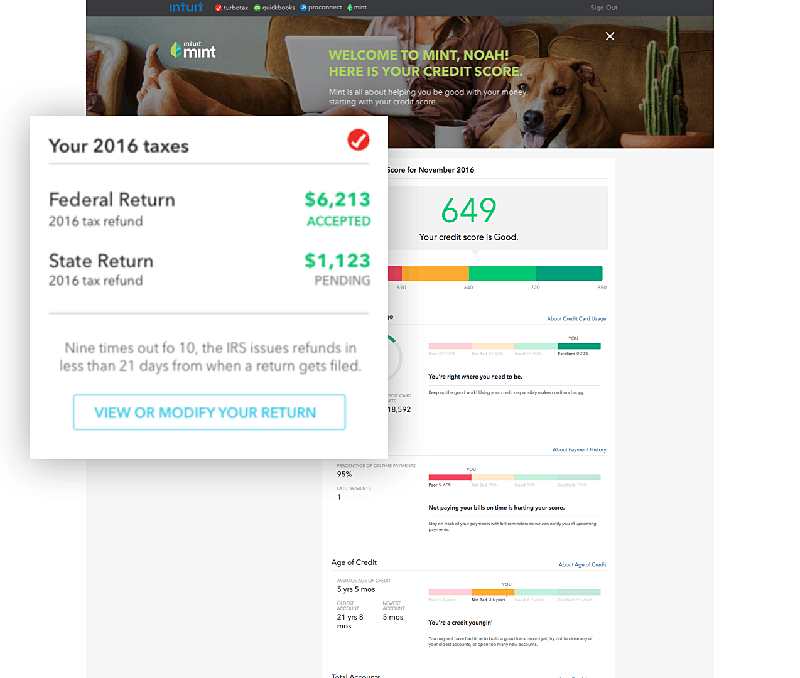
The success of this Mint “Credit Score + Tax Info” project renewed interest in the concept of a “modular Mint” with an interface that was tailored to a customer’s entry point (like a credit score promo) and would add features and functions based on a customer’s implicit and explicit choices.
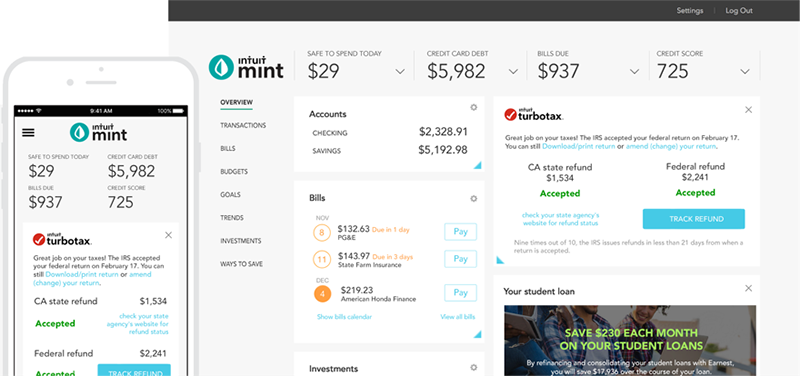
We redesigned Mint’s L1 landing page as a modular experience, allowing feature modules to be enabled or disabled based on each customer’s entry point and configuration.
Bootstrapped Mint Credit Score Landing

Modularized Mint Landing
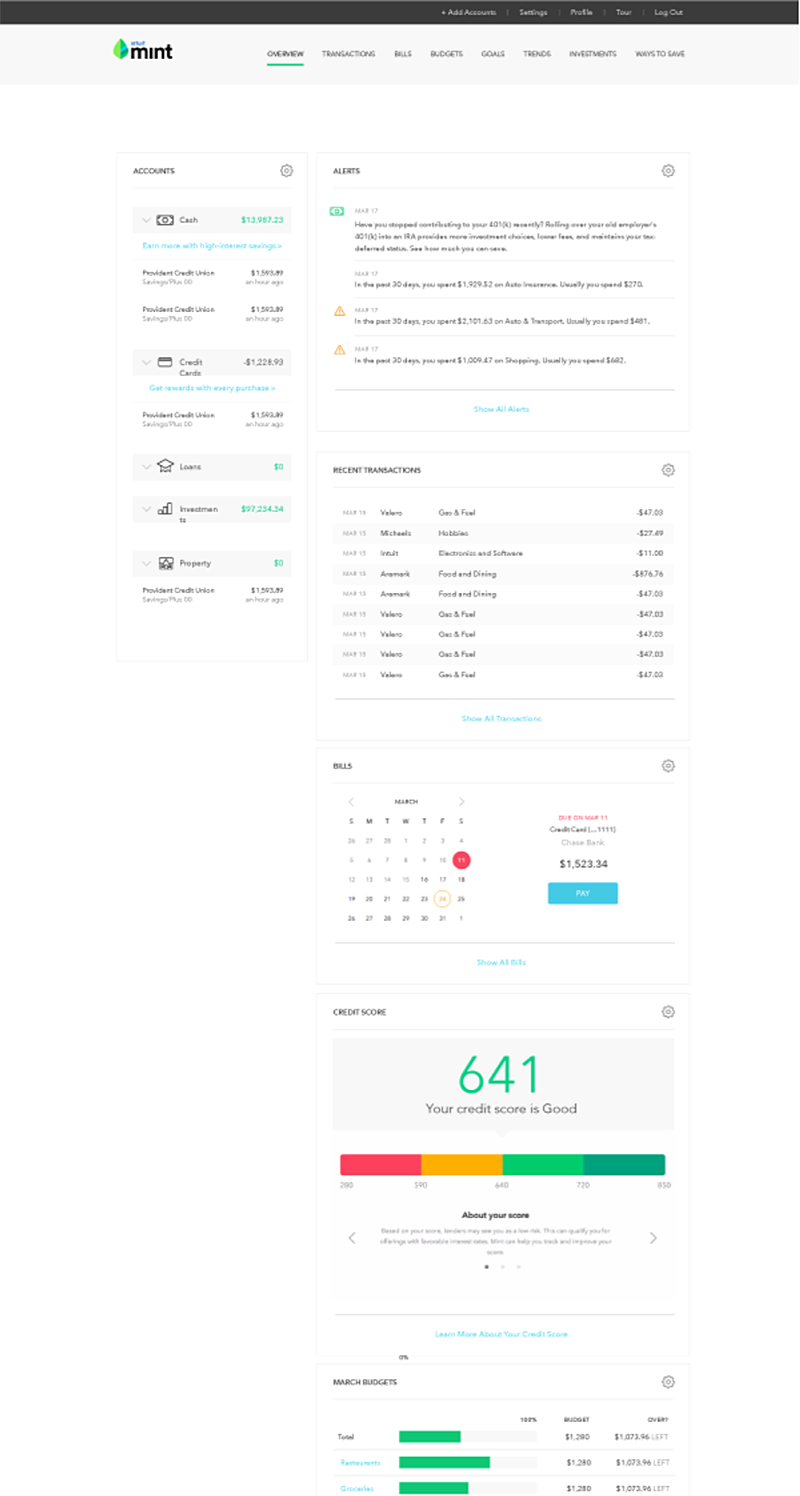
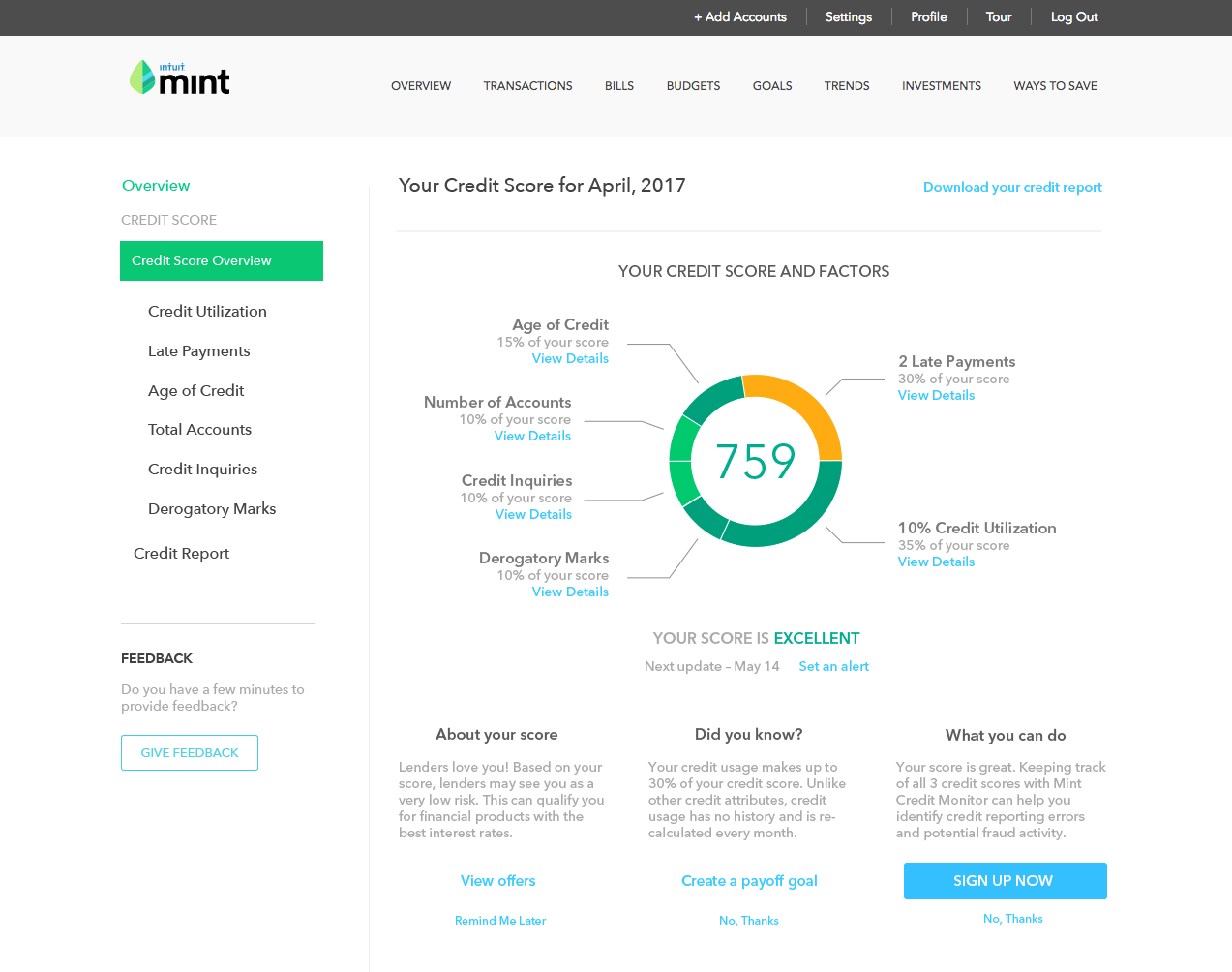
Credit score was the hero in the Credit Score experience, but once it became part of a configurable Mint experience, the L1 module needed some emphasis.
Again, Voice of the Customer provided insight:
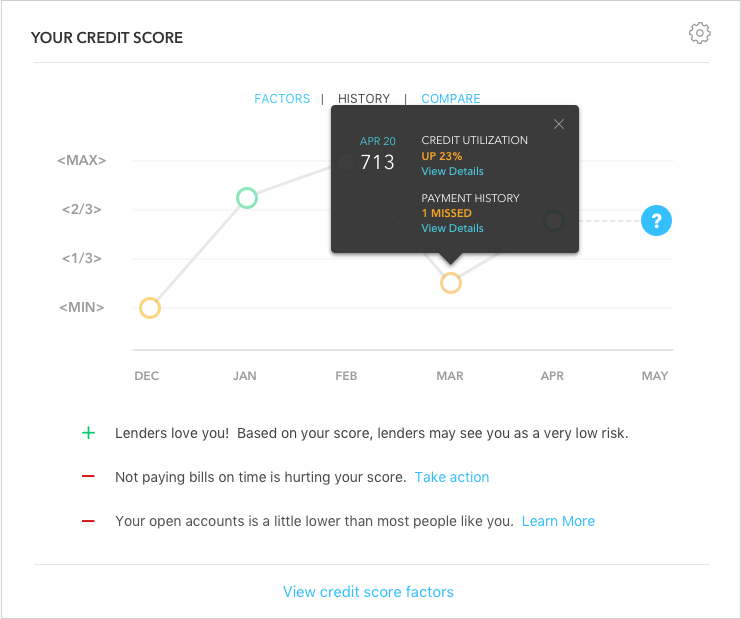
“I want to see how my credit score has changed over time.”

“I don’t know what my credit score means.”
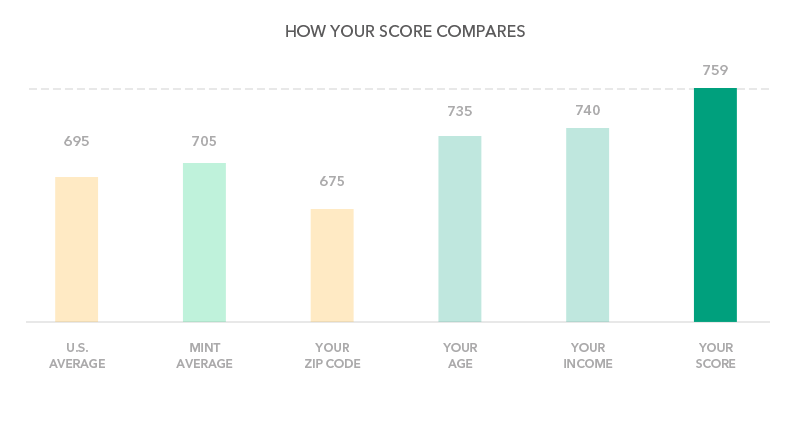
“How am I doing compared to others?”
“Why has my score gone up or down?”
Which led to an iteration of the design:
Credit Score Hero Module Concept
Score Comparison Module
Credit Score Timeline Module
While working on this module, we started thinking about how our competitors were able to provide credit score estimation calculators to their customers.
We were able to implement a white-label credit score estimation calculator in order to test if this is a feature that our customers would be interested in.

We quickly realized that there were so many facets to a credit score, and to answer every customer question on the landing page would be overwhelming.
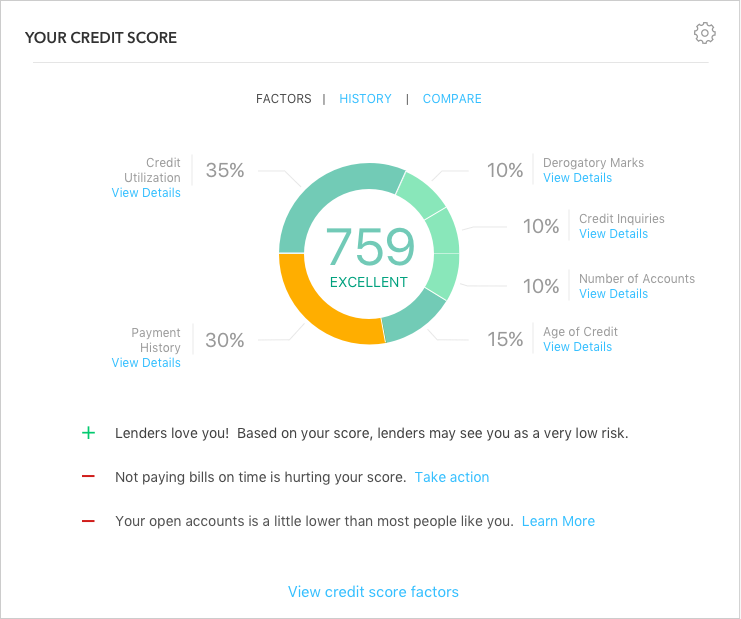
One answer to this problem came in the form of a set of tabbed credit score visualizations – Factors, History, and Compare. The customer could then choose what visualization best suited their needs. The experience would then remember their choice and present it to them when they returned.
Factors
History
Compare
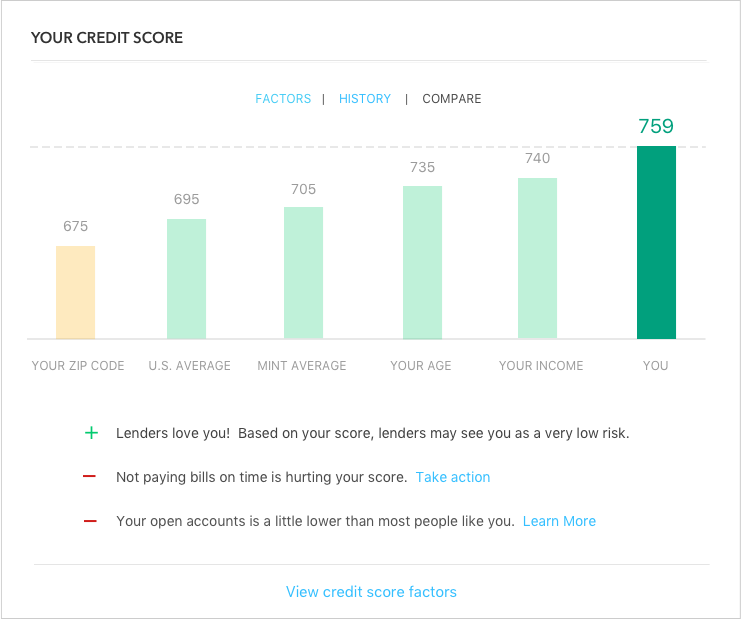
Mint Credit Score First Tab Concept
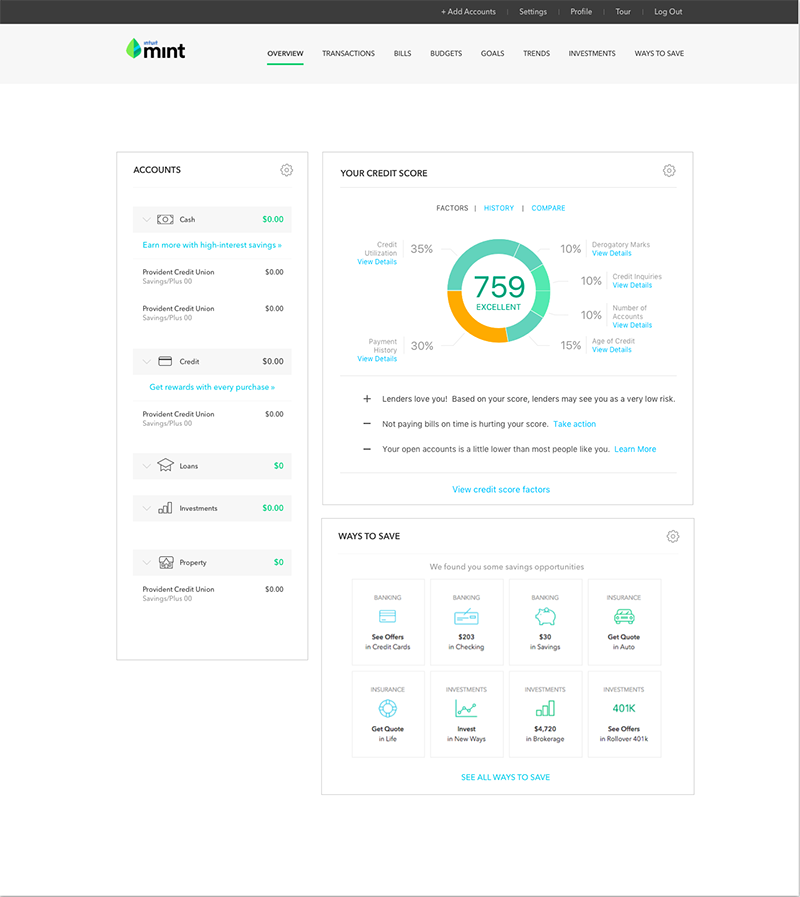
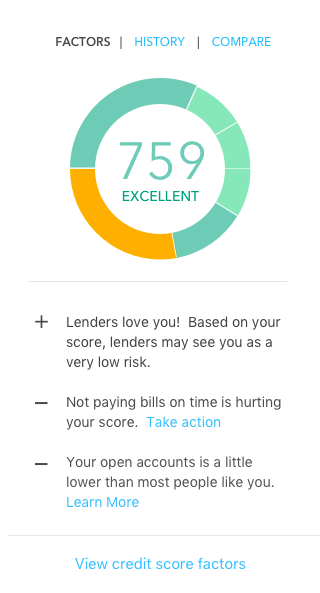
Mint Credit Score Key Factors Concept
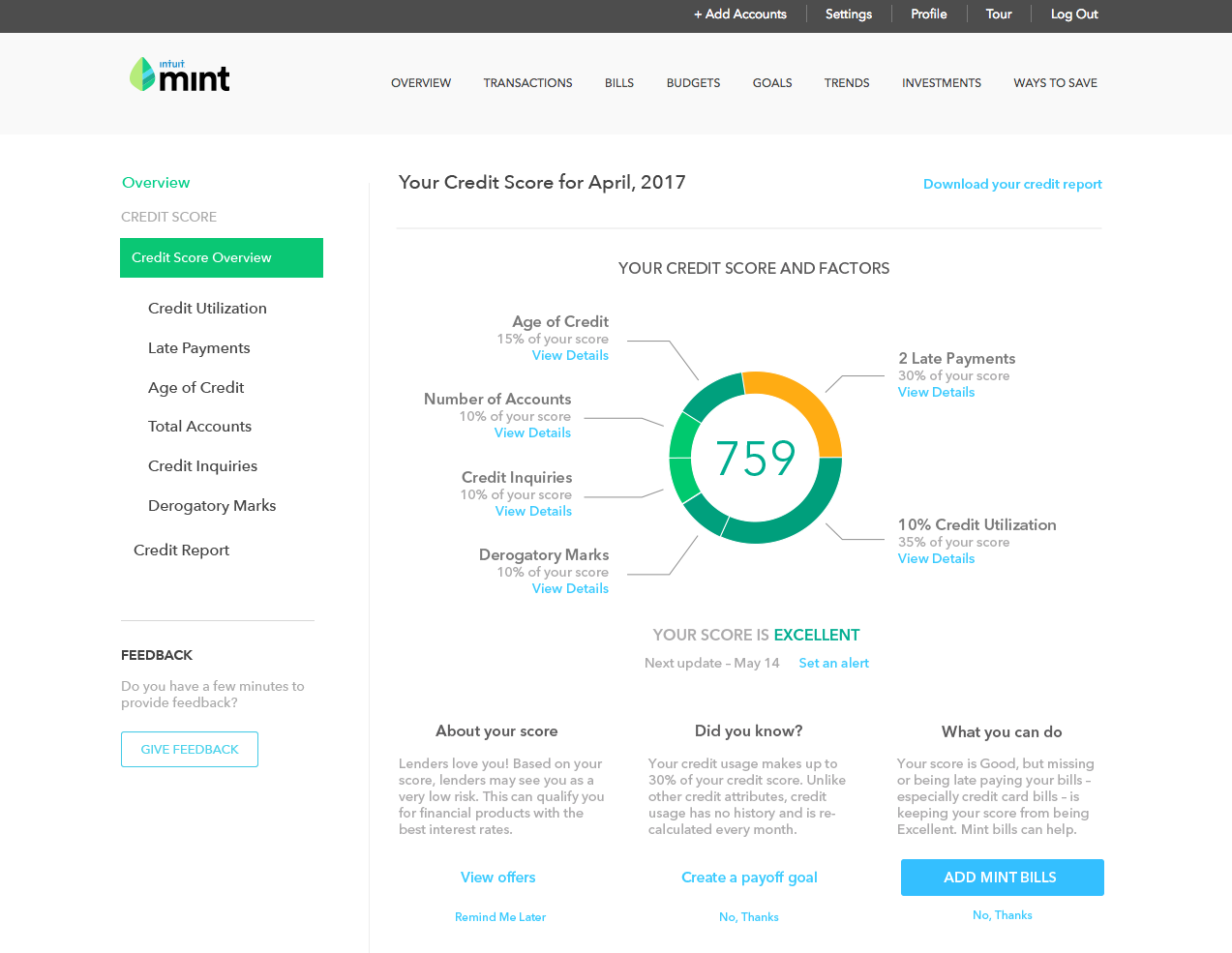
Another approach was to expose the credit score factors (age of credit, total accounts, derogatory marks, credit utilization, and late payments) with visual cues that allow the customer to zero in on factors that need their attention.
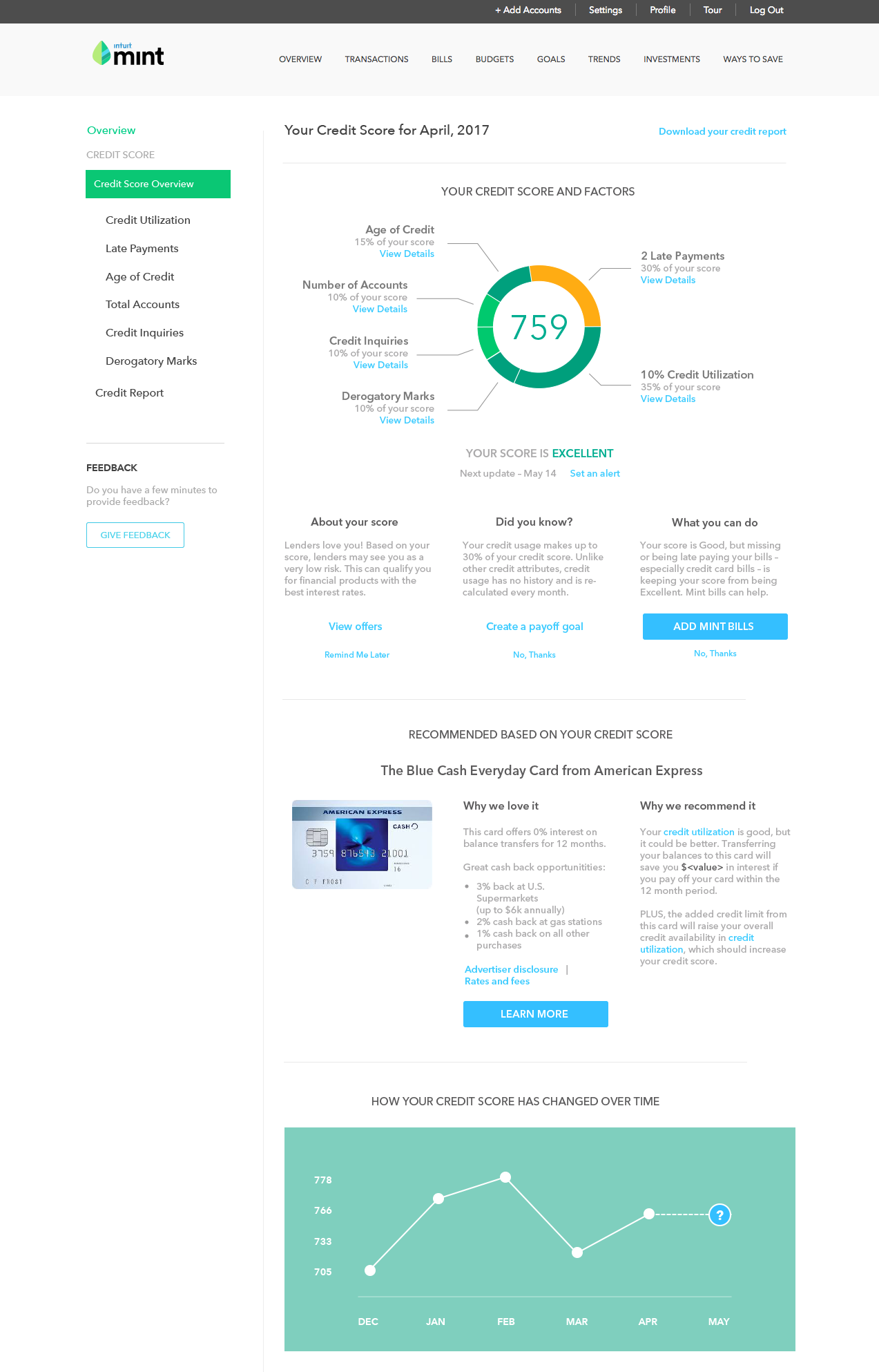
Reflection
Credit Score First evolved from a focused acquisition experiment into a broader strategy for a more personalized Mint. The work generated up to $100,000 in weekly revenue, increased email engagement, strengthened the connection between Mint and TurboTax, and demonstrated how the product could adapt to each customer’s entry point and financial goals.
The project reinforced the value of pairing a fast first release with a deliberate learning system. We did not need to predict the complete product on day one. We needed to deliver immediate value, measure what customers did next, and allow that evidence to shape the product vision.